
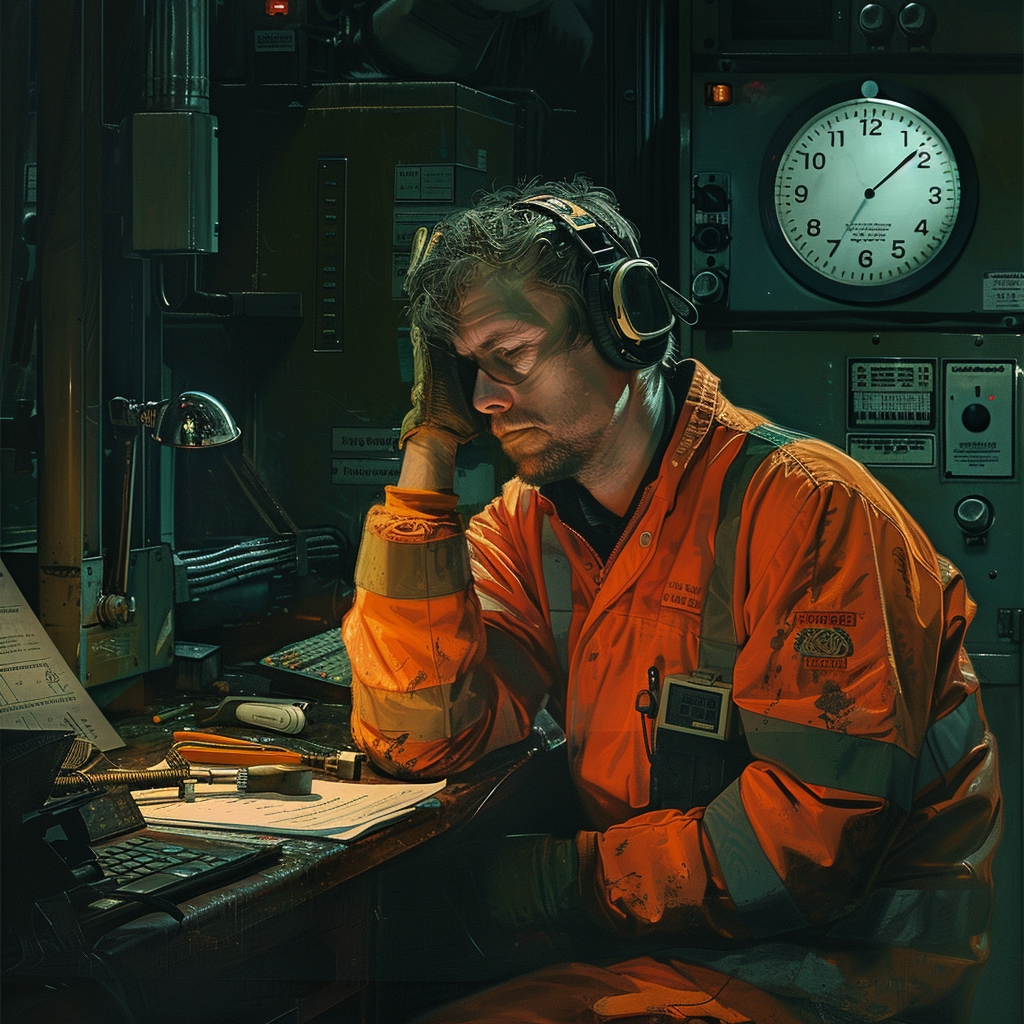
Microsleep Safety: Spot the Risk Before It Strikes
Microsleep safety is a growing concern across all industries. Fatigue and microsleeps are some of the most underestimated safety hazards on the job. They can affect anyone, anytime, regardless of role or experience. And when they strike, the consequences can be immediate and devastating. But what exactly are they and how do you know when they’re happening?
Ever blink and realize you missed the last 5 seconds? That’s not zoning out—that might be a microsleep. Or maybe you’ve driven past your exit without noticing. Perhaps you arrive at your destination only to realize you don’t remember parts of the trip. Have you ever had to reread the same sentence three times because “it just won’t stick”? These aren’t harmless mental lapses. They’re warning signs.
What Is a Microsleep?
A microsleep is a brief episode—anywhere from 1 to 30 seconds—where the brain essentially “shuts off.” Your eyes might still be open. You might even keep moving. But for those seconds, you’re not processing what’s around you.
That’s enough time to miss a stop sign, misjudge a lift, or walk straight into a hazard. That’s why understanding fatigue is critical to every worker’s risk awareness.
Cognitive and Physical Effects of Workplace Fatigue
Fatigue doesn’t always feel like exhaustion. It can show up as:
- Slower reaction times
- Skipped steps or forgotten checks
- Clumsiness or dropping tools
- Trouble focusing or zoning out
- Short temper or irritability
According to the Centers for Disease Control and Prevention (CDC) and NIOSH (National Institute for Occupational Health and Safety), as well as research published by the Transport Accident Commission, being awake for more than 17 hours impairs performance to the equivalent of a 0.05% blood alcohol level. After 24 hours, impairment rises to the equivalent of 0.10%—over the legal driving limit in most jurisdictions.
Common Work Conditions That Threaten Microsleep Safety
Fatigue builds quietly, often under common job conditions like:
- Long-distance driving without scheduled breaks
- Night shifts or extended overtime
- Repetitive or monotonous tasks
- Working alone with no social or supervisory interaction
- Inconsistent sleep schedules due to rotating shifts
Most workers underestimate their level of tiredness. But your brain won’t wait for permission to shut down.
Quick Self-Check Before a Shift
Ask yourself:
- Did I sleep at least 6 hours last night?
- Have I been awake more than 16 hours?
- Do I feel foggy, clumsy, or like I’m on autopilot?
If you answer yes to any of these, speak up. That’s not weakness. That’s smart safety—and part of micro sleep safety awareness.
How to Stay Ahead of Fatigue and Promote Microsleep Safety
- Get real sleep. 7–9 hours is ideal. Caffeine can’t replace it.
- Take breaks. Even short ones reset your alertness.
- Call it out. Speak up if you’re too tired to work safely.
- Look out for others. If someone seems off, check in.
- Sleep smart. Use blackout curtains and unplug before bed, especially if working nights.
Job-Specific Fatigue Triggers That Impact Microsleep Safety
- Drivers: Pull over every 2 hours. A 15-minute nap can prevent disaster.
- Remote or isolated workers: Set movement timers. Isolation increases fatigue risk.
- Night crews: Be extra alert between 2–6 a.m.—your body wants sleep most during these hours.
Think of Fatigue Like a Safety Hazard
Should you operate a saw without safety glasses? Most people would say no without hesitation—because the risk is immediate and obvious.
Fatigue deserves the same level of respect. It’s not as visible as flying debris or moving blades, but it’s just as capable of causing harm.
Just like with fall hazards or lockout/tagout protocols, fatigue requires proactive control. That means planning rest, using monitoring systems when possible, and creating a culture where workers can admit when they’re not at their best—without fear or judgment. It’s a hazard that requires awareness, prevention, and teamwork.
Final Thoughts
Micro sleeps are like potholes in your brain’s attention span. One unexpected jolt and you lose control. You can’t willpower your way through dangerous fatigue.
Pause. Reset. Speak up. Whether you’re behind the wheel, in a lift truck, or on a late shift—if you feel yourself fading, act. Fatigue isn’t failure. It’s feedback. And rest isn’t a reward. It’s required.
Stay safe, stay sharp, and watch each other’s backs.
Optional Discussion Questions
- Can you recall a time when fatigue nearly caused a mistake—what happened?
- What systems could we add to catch micro sleeps before they become incidents?
- Who checks in on you when you’re worn out—and how can we all do more of that?

